
What Is Remedial Massage? A Simple Guide
“Remedial massage” is one of those terms you see everywhere without ever being told what it actually means. Is it the same as a deep tissue massage? Is it only for injuries? Will it hurt? I’m Rayven, a remedial massage therapist in Castle Hill, and this is the plain-English guide I wish more people had before their first appointment.
What is remedial massage?
Remedial massage is a form of therapeutic soft-tissue massage that works with your muscles, tendons and the connective tissue around them. The word “remedial” simply points to the intent: rather than a fixed, whole-body routine, the session is planned around your individual needs — the areas that feel tight or restricted, how you move, and what you’d like to get out of it.
In practice, that means two people can book the same appointment and receive quite different sessions. A remedial therapist assesses, listens and adapts, rather than applying the same sequence to everyone.
What does remedial massage do?
Remedial massage may be used as part of a broader approach to looking after your body. People commonly find it helpful for:
- Everyday muscle tension and tightness
- Stiffness and a feeling of restricted movement
- Recovery after exercise or physically demanding work
- Supporting mobility and flexibility alongside your own stretching
- The tension that builds up from long hours at a desk
It’s worth being clear about the limits, too. Massage may help you feel looser and more comfortable, but it isn’t a substitute for medical care. If you have pain that’s severe, persistent, sudden or unusual — or a health condition that needs assessment — see your doctor first. A good therapist will always tell you when something is outside what massage can help with.
Remedial massage vs deep tissue massage
This is the question I’m asked most. The short answer: deep tissue describes a technique — firmer pressure applied to deeper layers of muscle — while remedial massage describes an approach. A remedial session may include deep tissue work when it’s appropriate for you, but it’s led by assessment and your goals, not by pressure for its own sake.
Put another way: “deep tissue” tells you how hard; “remedial” tells you how considered. More pressure doesn’t automatically mean a better massage. The right pressure is the one that suits your body on the day.
Remedial massage vs sports massage
Sports massage is oriented around physical performance and recovery — it’s often used by people training or competing, before or after activity. Remedial massage is broader: it’s for anyone with muscular tension or movement they’d like to support, whether or not sport is part of the picture.
There’s real overlap, and many therapists (myself included) draw on both. If you train regularly, a remedial approach can absolutely support your recovery — the difference is that it starts from your individual assessment rather than a sport-specific template.
What happens in a remedial massage session?
If you’ve never had one, here’s the general shape of a session — this is how I run mine, and most remedial therapists work similarly.
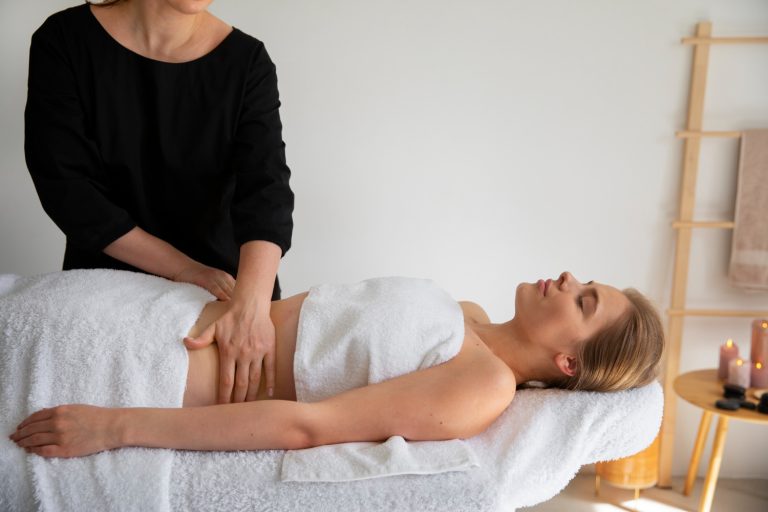
It starts with a conversation about what you’d like to focus on and how your body’s been feeling. From there the therapist identifies areas of tension and works through them with techniques suited to you, checking in on pressure and comfort as they go. A good session is a two-way thing: your feedback shapes it. Many therapists finish with simple movement or aftercare suggestions to help the benefit last.
You can read a fuller, step-by-step walk-through of how I run a session on my remedial massage page.
How often should you have a remedial massage?
There’s no single answer that’s right for everyone, and be a little wary of anyone who gives you a fixed number. How often you might book depends on your lifestyle, activity levels, goals, budget and how your body responds.
Some people come in occasionally, when tension has built up or before a big event. Others prefer a regular rhythm as part of looking after themselves. The honest guidance is to start with what your body’s telling you and adjust from there, rather than committing to a schedule because a website told you to.
Is remedial massage right for you?
Remedial massage suits a wide range of people — office workers carrying desk tension, active adults supporting recovery, and anyone who simply wants to move more comfortably. It isn’t appropriate in every situation, though. If you have an injury, a medical condition or any concern about whether massage is suitable for you, it’s worth speaking with your doctor first, and telling your therapist so the session can be adapted.
If that sounds like the kind of care you’re after, that’s exactly how I work.
Book a remedial massage in Castle Hill
I’m Rayven — I’ve been practising since 2008 and hold a Diploma of Remedial Massage. At Rays Healing Touch in Castle Hill, every session is by appointment and tailored to you. If you’d like to book, or just have a question first, I’d be glad to help.